1962
Creation of the SFTRF by Pierre DUMAS, then mayor of Chambéry and Minister of State for Public Transport.
From Saturday, November 7th at 22:00 PM to Sunday, November 8th at 6:00 AM
– From Friday, November 20th at 22:00 PM to Saturday, November 21st at 6:00 AM | From Saturday, November 21th at 22:00 PM to Sunday, November 22th at 6:00 AM
– From Saturday, November 14th at 22:00 PM to Sunday, November 15th at 2:00 AM | From Monday, November 23rd at 22:00 PM to Tuesday, November 24th at 6:00 AM
From Monday, November 30th at 23:00 PM to Tuesday, December 1st at 6:00 AM
Société Anonyme d'Economie Mixte, whose main shareholder is the Caisse des Dépôts et Consignations, the Société Française du Tunnel Routier du Fréjus has the mission, within the framework of a State concession, of developing and operating the Franco-Italian Fréjus tunnel and the Maurienne motorway.
The Fréjus Tunnel, 12,87 km long, opened in 1980, this cross-border structure linking France and Italy constitutes a major axis for regional and international exchanges.
The 67,46 km long Maurienne motorway connects the Fréjus Tunnel to the French motorway network. Perfectly integrated into the Maurienne Valley, which it has helped to open up, the A43 also provides exceptional access to winter sports resorts and major business hubs.
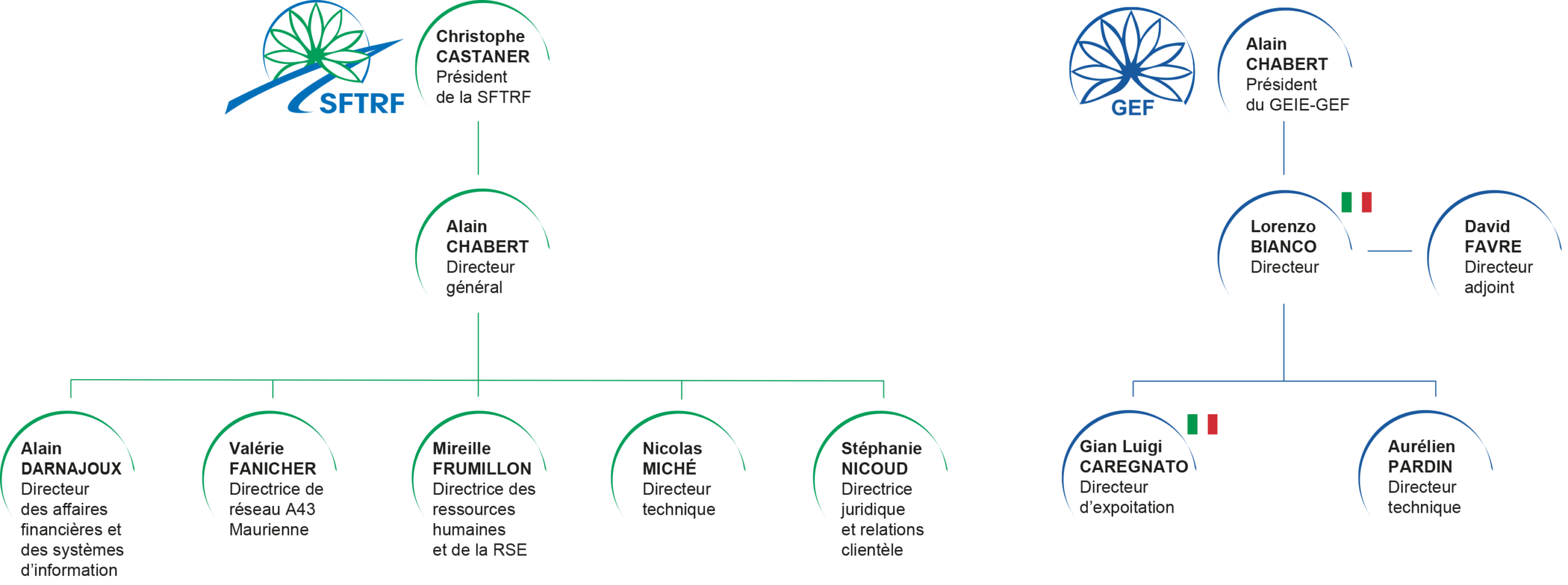
Composed of 18 members appointed for a 6-year term, the board of directors defines the company's strategic direction and oversees its implementation. It appoints a Chairman from among its members and a Chief Executive Officer.
Two bodies support the board of directors: an audit and CSR committee which regularly reviews and monitors the company's accounts, and a market advisory committee, which ensures compliance with the rules of procurement procedures.
| Christophe CASTANER | Chairman of the Board of Directors |
| Nathalie FURBEYRE | Representing the department of Savoie |
| Patrice VERCHERE | Representing the Rhône department |
| Bernard PERAZIO | Representing the department of Isère |
| Alain CARACO | Representing the city of Chambéry |
| André GAGNIERE | Representing the city of Modane |
| Philippe VALENTIN | Representative of the Lyon Métropole Chamber of Commerce and Industry |
| Paul DAVID | Representative of the Chamber of Commerce and Industry of Grenoble |
| Antonella JACQUEMMOZ | Representing the Chamber of Commerce and Industry of Savoie |
| Hatem BEN ZAIED | |
| Marie BLOCTEUR | |
| Christophe BOURDILLON | |
| Giulia CARRÉ |
|
| Olivier FABAS | |
| Aude de LARDEMELLE | |
| Camille LAURENS-VILLAIN | |
| Florence SAUTEJEAU | |
| Stéphanie SIMON |
Alain CHABERT
Régis CLAPPIER
Florian GERARD
Marc GONZALES
Thibault NORAZ
Pyramide Conseils Firm
KPMG SA firm
The SFTRF was originally a SEM (Société Anonyme d'économie mixte locale) of which the State became the majority shareholder.
Having held no shares in the company when it was created in 1962, the French State, through Autoroutes de France (ADF), acquired 49% in 1992, then took control in 1998, acquiring 84% of the shares following an initial recapitalization of 24 million francs, made necessary by the company's financial situation, a consequence of insufficient funding for the motorway. This shortfall stemmed from overly optimistic initial traffic forecasts and equally optimistic projections for revenue per truck.
Two further recapitalizations were subsequently carried out in 2004 (€55 million) and 2008 (€447 million), fully subscribed by the French State through the APE (French State Shareholding Agency). The shares held by ADF were transferred to this entity on January 1, 2009, following the latter's dissolution. The €447 million from the last recapitalization was entirely used to reduce SFTRF's debt. After this final recapitalization, the French State held 99,94% of SFTRF's capital.
During the 2012 financial year, the APE transferred its SFTRF shares to an administrative structure, the FDPITMA (Fund for the Development of an Intermodal Transport Policy in the Alpine Massif). This enabled the establishment of a sustainable financing procedure for the company, through the reallocation of dividends paid by ATMB to the State, a shareholder, as a balancing subsidy for the benefit of SFTRF.
The year 2025 was marked by a key refinancing operation, with the repayment, on June 30, 2025, of a bond loan with a nominal value of €828 million, issued by the National Motorway Fund to finance the A43 motorway. Finally, in July 2026, the State sold its shares to the Caisse des Dépôts et Consignations (CDC). This transaction is part of the State's strategy to reorganize the management of its shareholdings to promote industrial sovereignty, while maintaining public control of SFTRF through an institutional shareholder.

Creation of the SFTRF by Pierre DUMAS, then mayor of Chambéry and Minister of State for Public Transport.
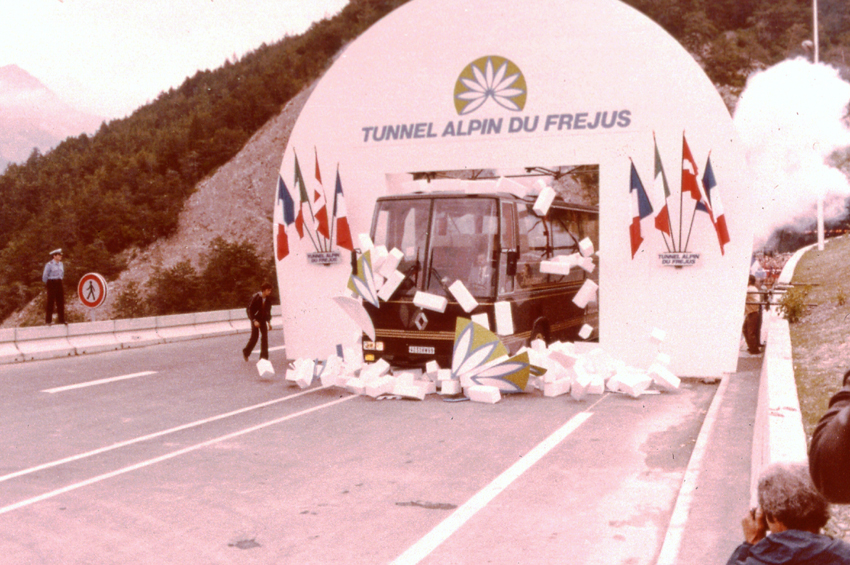
July 12: Inauguration and commissioning of the Fréjus tunnel (12,87 km).
Initially, only light vehicles were allowed to pass through the tunnel. A few months later, in October, the first heavy goods vehicles were allowed to use the tunnel.
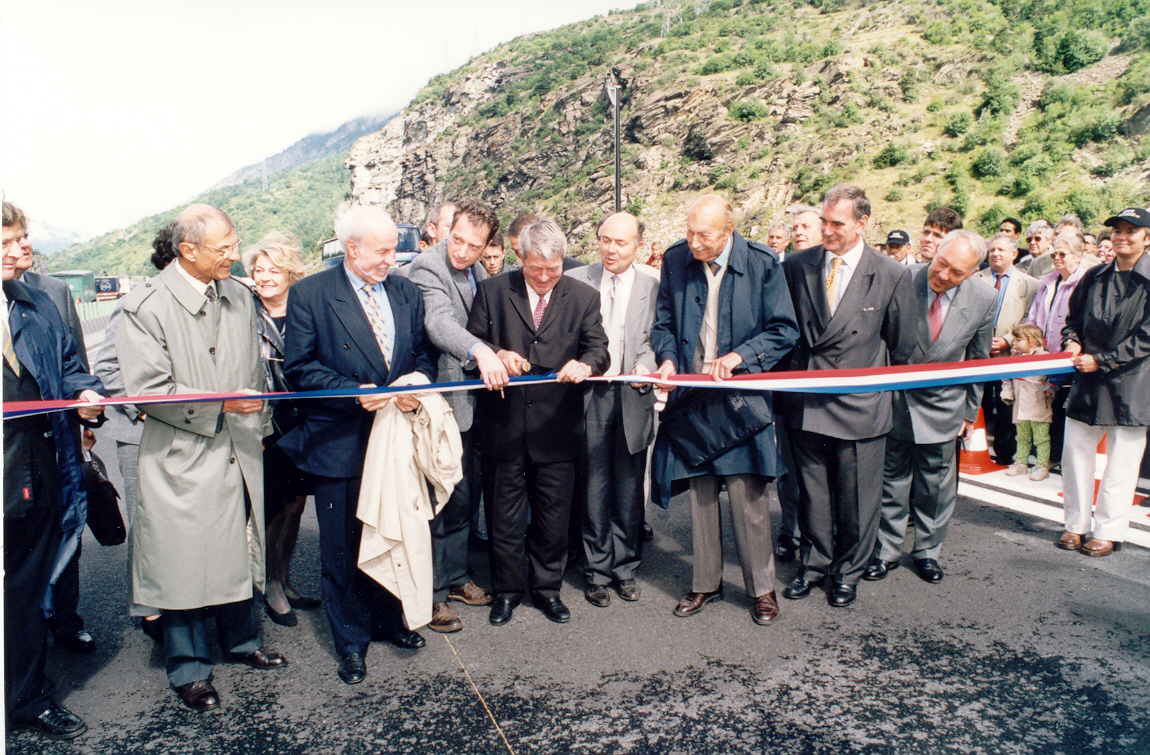
Inauguration and commissioning of the A43 Maurienne. Built with a focus on strong integration into the environment, it was commissioned in three successive phases.
In January 1997, the first 30 km section, between Aiton and Sainte Marie de Cuines, was opened to traffic.
Then in January 1998, it was the turn of the second section, between Sainte Marie de Cuines and Saint Michel de Maurienne, with a length of 20 km.
Finally, in July 2000, the completion of the last section, 17,46 km long, between Saint Michel de Maurienne and the Fréjus tunnel, marked the full opening of the motorway: 67,46 km long (including the access ramp), the Maurienne motorway has since then linked the AREA network to the Fréjus road tunnel.
Creation of the CFETIT. Establishment of the Tunnel Intervention Techniques Training and Instruction Center (CFETIT) on the French platform of the Fréjus road tunnel following the Mont-Blanc fire.
The CFETIT is the result of a partnership between the Fréjus tunnel companies (SFTRF and SITAF) and the Savoie departmental fire and rescue service, which enabled its opening in April 2002, after two years of work.
This training center, unique in Europe in its design and construction, allows the learning of intervention techniques in closed or semi-closed environments (tunnels, underground parking, etc.), to understand the risks involved and to propose appropriate operational procedures.
Fire in the Fréjus tunnel.
The building was closed for two months.
Creation of the GEF (Fréjus Exploitation Group).
A new entity for joint management of the Fréjus tunnel between the two operating companies SFTRF and SITAF.
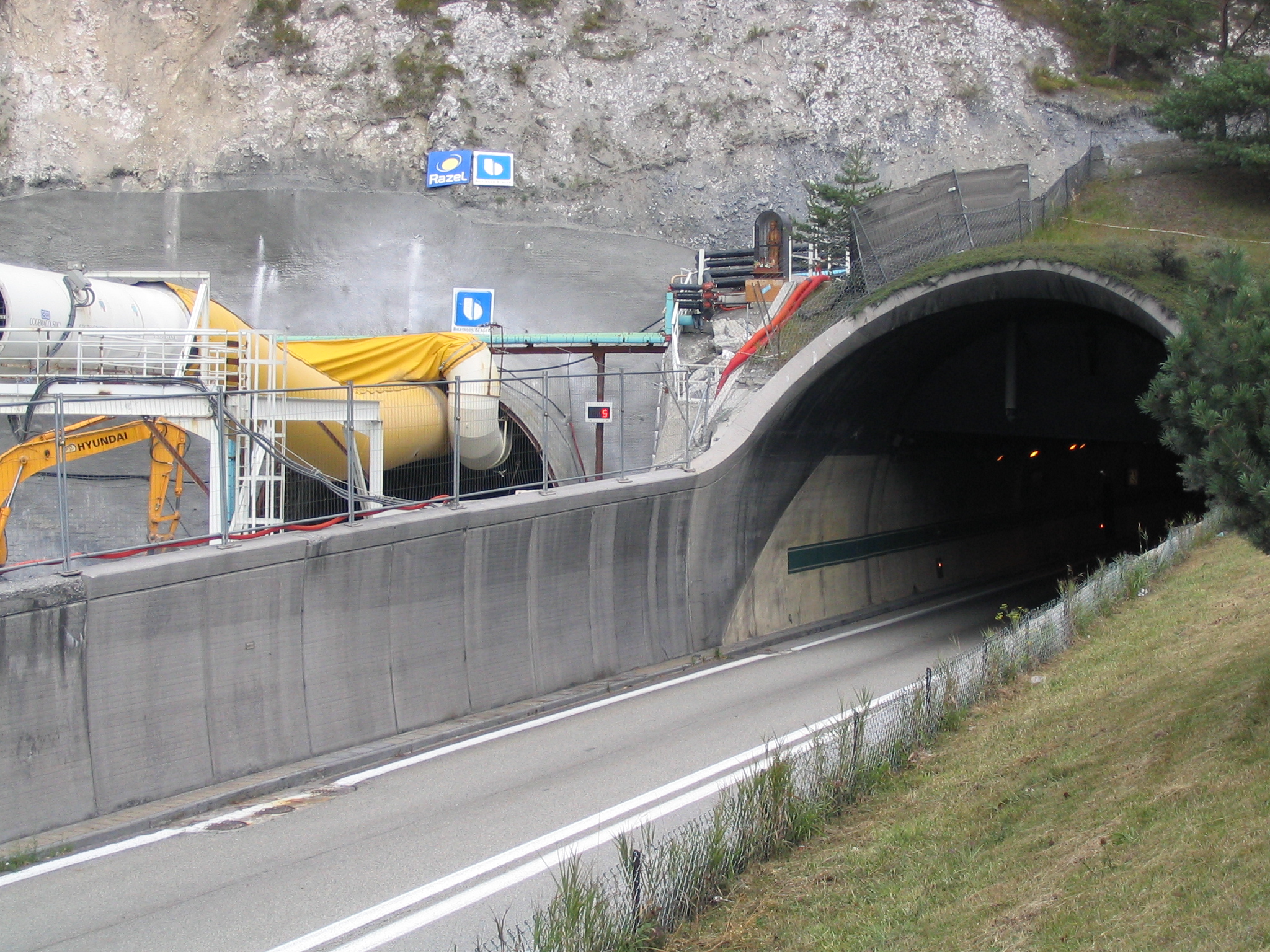
Start of drilling of the second Fréjus tube.
Reconstruction of the Charmaix viaduct from 2016 to 2023.
Deconstruction of the old viaduct from summer 2023 and completion of the site redevelopment in autumn 2024.
June 2: SFTRF includes its purpose in its statutes.
“As manager of an international motorway axis, a link between France and Italy, we act in favor of the economic development and attractiveness of Maurienne, by placing the safety and quality of our network at the heart of our daily actions.
Faced with the challenges of sustainable development, our company is committed to preserving the environment and reducing greenhouse gas emissions. As an employer rooted in its local area, we support local employment by ensuring the development of employee skills.
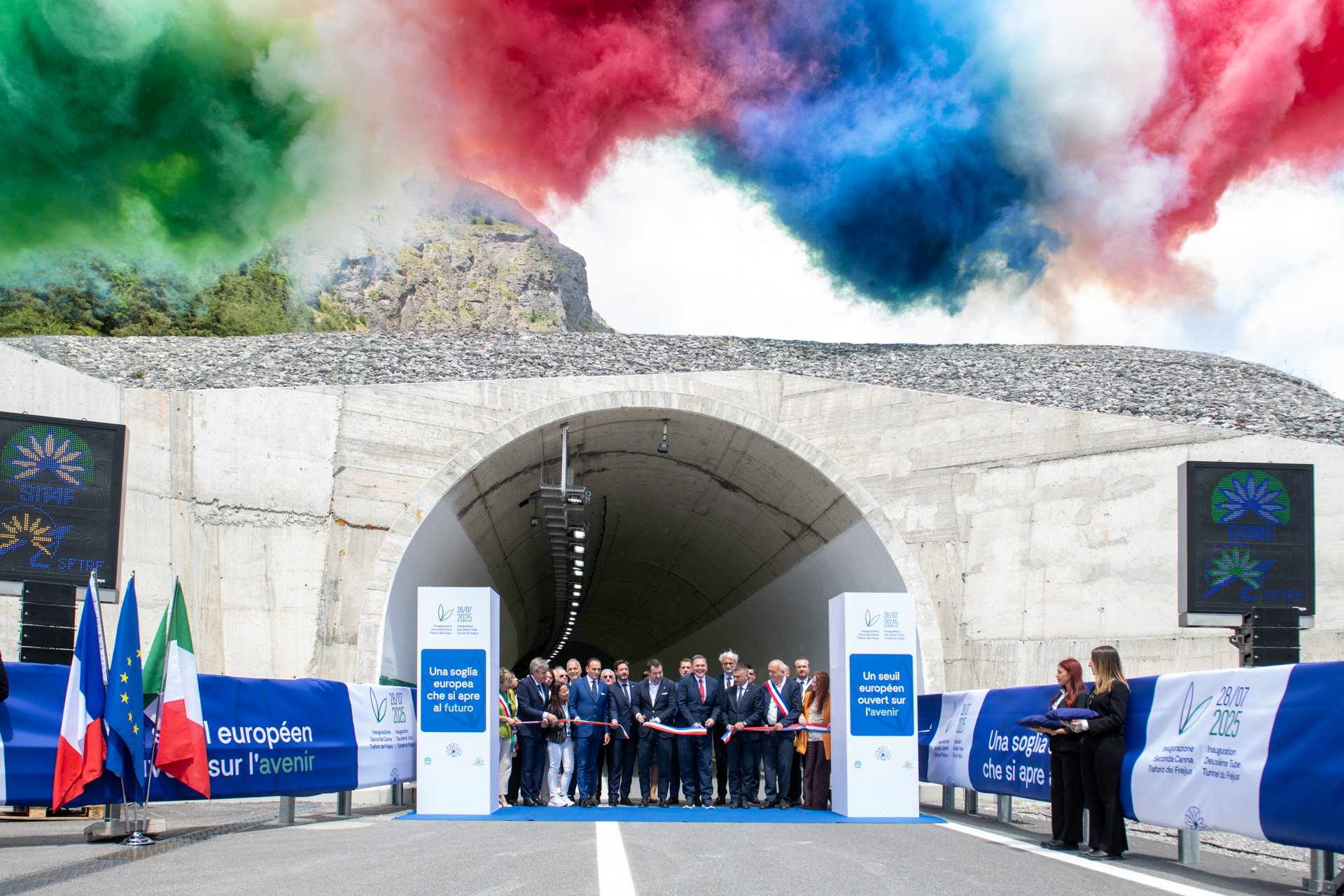
August 1: The second tube of the Fréjus tunnel opens to traffic after being inaugurated on July 28, in the presence of Philippe TABAROT, French Minister of Transport, and Matteo SALVINI, Vice-President of the Council and Italian Minister of Infrastructure and Transport.