Our values
Our mission
"As the manager of an international motorway, a link between France and Italy, we are working to promote the economic development and attractiveness of the Maurienne region, placing the safety and quality of our network at the heart of our daily work. Faced with the challenges of sustainable development, our company is working to preserve the environment and reduce greenhouse gas emissions. As an employer rooted in its region, we support local employment by ensuring the development of employee skills."
Our CSR policy
Corporate Social Responsibility (CSR) is defined by the European Commission as the voluntary integration by companies of social and environmental concerns into more ethical and sustainable practices in the way the company operates, in order to contribute to sustainable development issues.
Since 2021, the SFTRF has sought to give new impetus to the implementation of a coordinated and sustainable CSR policy, in particular by providing the means to unite the collective around subjects such as: sustainable development, safety and risk prevention, gender equality and quality of life and working conditions, health and job retention, and the fight against harassment at work.
Sustainable development
As stated in its purpose, the SFTRF is committed to a sustainable development approach for its activities.
The starting point of the approach was the realization of the greenhouse gas emissions assessment (carbon footprint method) for the entire company in order to identify avenues for improvement. The company has also been approached by the government through several national plans aimed at reducing electricity consumption and improving the energy efficiency of tertiary buildings.
Following these various observations, a sustainable development action plan was drawn up in order to reduce the impact of SFTRF's activities on the environment and achieve the objectives set for both energy consumption and greenhouse gas emissions.
This action plan is updated regularly to ensure that actions are being implemented and are effective on the ground. It is regularly updated to take into account regulations and best practices that minimize natural resource requirements and greenhouse gas emissions. It also focuses on biodiversity conservation, in addition to the themes already mentioned.
Safety and risk prevention
The SFTRF places the highest priority on occupational risk prevention. Safety is central to all of SFTRF's activities. The shared goal of all employees is to ensure the safety of customers using our facilities while preserving the physical and mental health of those involved.
Upon arrival at the company, each employee receives safety induction training that presents the general risks encountered in the company as well as the preventive measures implemented to avoid or reduce them. These instructions are then supplemented during on-the-job training and regularly reiterated to the teams, particularly through 1-minute safety sessions.
We are all, at our own level, responsible for our own safety, as well as that of our colleagues. This translates into behaviors, know-how, and operating procedures specific to each profession, but whose common goal is to ensure the prevention of workplace accident risks.
The vigilance of SFTRF staff is based on the following 10 security principles:
- Always think before you act.
- In all circumstances, I follow safety instructions. Nothing justifies dangerous behavior.
- If I witness a risky situation, I immediately alert the people concerned and inform my superiors in order to protect workers and improve the level of safety.
- Alcohol, drugs, and certain medications can influence our behavior and create risky situations. For my safety and that of my colleagues, at work, I am in full possession of my faculties.
- I wear and use the personal protective equipment provided to me.
- near traffic lanes, I must be seen by drivers: I wear high-visibility clothing.
- On the A43 network or in the Fréjus tunnel, customers travel at high speeds, and driver inattention can have serious consequences. I always keep an eye on traffic when working under signage or near busy roads.
- At toll booths or on rest areas and platforms, to cross the roads, I take the marked paths, always giving priority to users.
- With my vehicle, I signal and anticipate all maneuvers so as not to surprise users.
- If I stop on the emergency lane, I leave my vehicle and protect myself by going behind the safety barriers.
Professional equality between women and men and quality of life and working conditions
The Rebsamen law of August 17, 2015 provides for negotiations relating to professional equality between women and men and to quality of life and working conditions (article L 2242-1 of the labor code).
The employer is required to ensure equal pay for men and women for the same work, or work of equal value: this obligation prohibits any differentiation in pay based on gender.
Similarly, no decision may take into account membership of a specific gender, concerning training, classification, promotion, transfer, leave, disciplinary sanction or dismissal.
Furthermore, convinced that the quality of life and working conditions is a factor in the development of both individual and collective well-being of employees, serving the overall and sustainable performance of the company and the satisfaction of its customers, management wished to negotiate an agreement with the social partners on these two complementary themes.
The purpose of this agreement is to promote professional equality between women and men (EPFH) and quality of life and working conditions (QVCT) within the company, to set progression objectives and to determine actions to achieve these objectives.
This agreement covers the following areas:
- Professional integration and retention in employment of disabled workers.
- Supplementary social protection for employees.
- The exercise of the right of direct and collective expression of employees.
- Professional equality.
- The right to disconnect.
- The fight against discrimination.
- Prevention of hardship.
Health and job retention
As part of its CSR policy and concerned about the health of its employees, the SFTRF is committed to a dynamic and positive approach aimed at maintaining the relationship with its employees on sick leave. This involves regular communication of useful information and regular exchanges in order to maintain the relationship and prepare the employee's return to the company when this is considered.
For work stoppages lasting more than one month, a liaison appointment is offered to the employee, who is free to choose whether or not to follow up. This appointment is not a medical examination but an interview between the employee and the employer, involving the occupational health and safety department. Depending on the case, the employee will be seen by a person from human resources, the line manager (if the employee agrees), and a member of the construction industry's SST (if applicable).
This meeting is intended to inform the employee of their rights, anticipate and facilitate their return from absence. Depending on the situation, the possibility of a return visit at the employee's initiative, a supervised trial period, a company vocational rehabilitation agreement, training activities, and measures to adjust the position and working hours may be discussed. Depending on the situation, several meetings will be necessary, and the content of the interview may vary.
A "Health and Job Retention" unit has been created and is made up of a multi-professional team that remains available to inform, support and guide employees who are sick.
More generally, the SFTRF is also committed to managing various disability situations, thus promoting a win-win approach for the company and employees:
- For employees with disabilities, the actions implemented allow them to maintain professional activity and a social life.
- For the company, it is a performance lever that allows it to retain or attract skills within the company while reducing turnover and the human and financial impacts that a dismissal for incapacity would represent.
A disability representative has been appointed; this is the HR/CSR department.
The fight against harassment at work
In accordance with Law No. 2018-771 of September 5, 2018, the law for the freedom to choose one's professional future, the SFTRF has appointed a representative responsible for guiding, informing, and supporting employees in the fight against moral and sexual harassment. The CSE has also appointed a representative from among its members to address these issues.
A procedure for reporting and handling cases of harassment has been drawn up and validated by management.
The General Data Protection Regulation (GDPR)
The General Data Protection Regulation (GDPR), adopted at European level, came into force on May 25, 2018.
Many formalities with the CNIL are being eliminated. In return, the responsibility of organizations is strengthened. They must now ensure optimal data protection and be able to demonstrate this by documenting their compliance.
Consequently, employees' personal data is used within the framework of their contractual relationship with the SFTRF by SFTRF staff and is kept in accordance with social legislation.
The quality approach
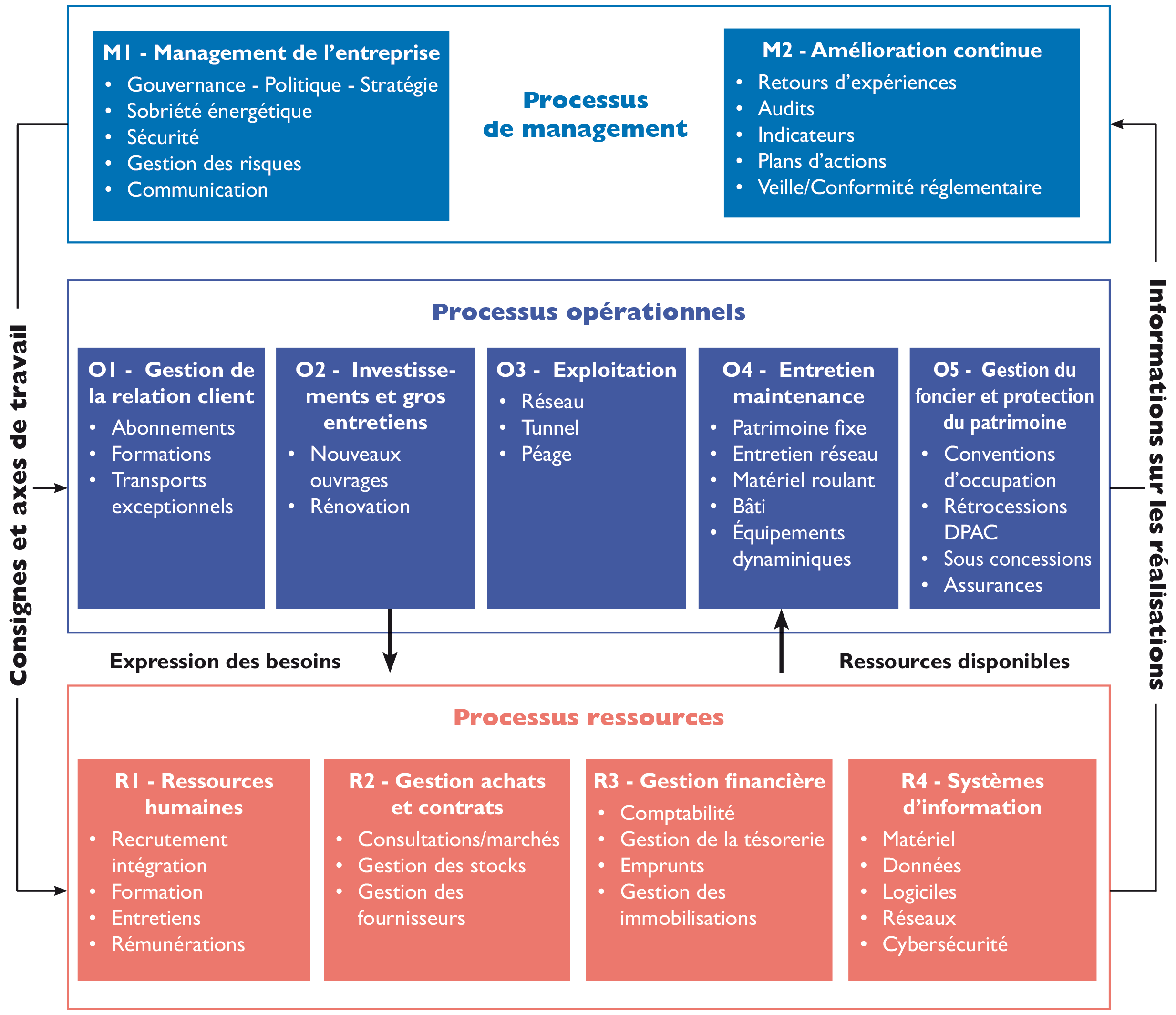
To structure and better formalize its business, SFTRF decided to implement a quality management system covering all of its activities. The quality approach helps to ensure the reliability and improvement of practices over time, limit operational and regulatory risks, and mobilize teams around an ambitious business project.
Structured around 11 processes, the quality management system identifies the activities carried out by the company and allows for the implementation of appropriate and up-to-date documentation for the completion and traceability of the various missions. The quality management manual describes in more detail the organization implemented within the SFTRF.
Security
Traffic management and user information
It is carried out through:
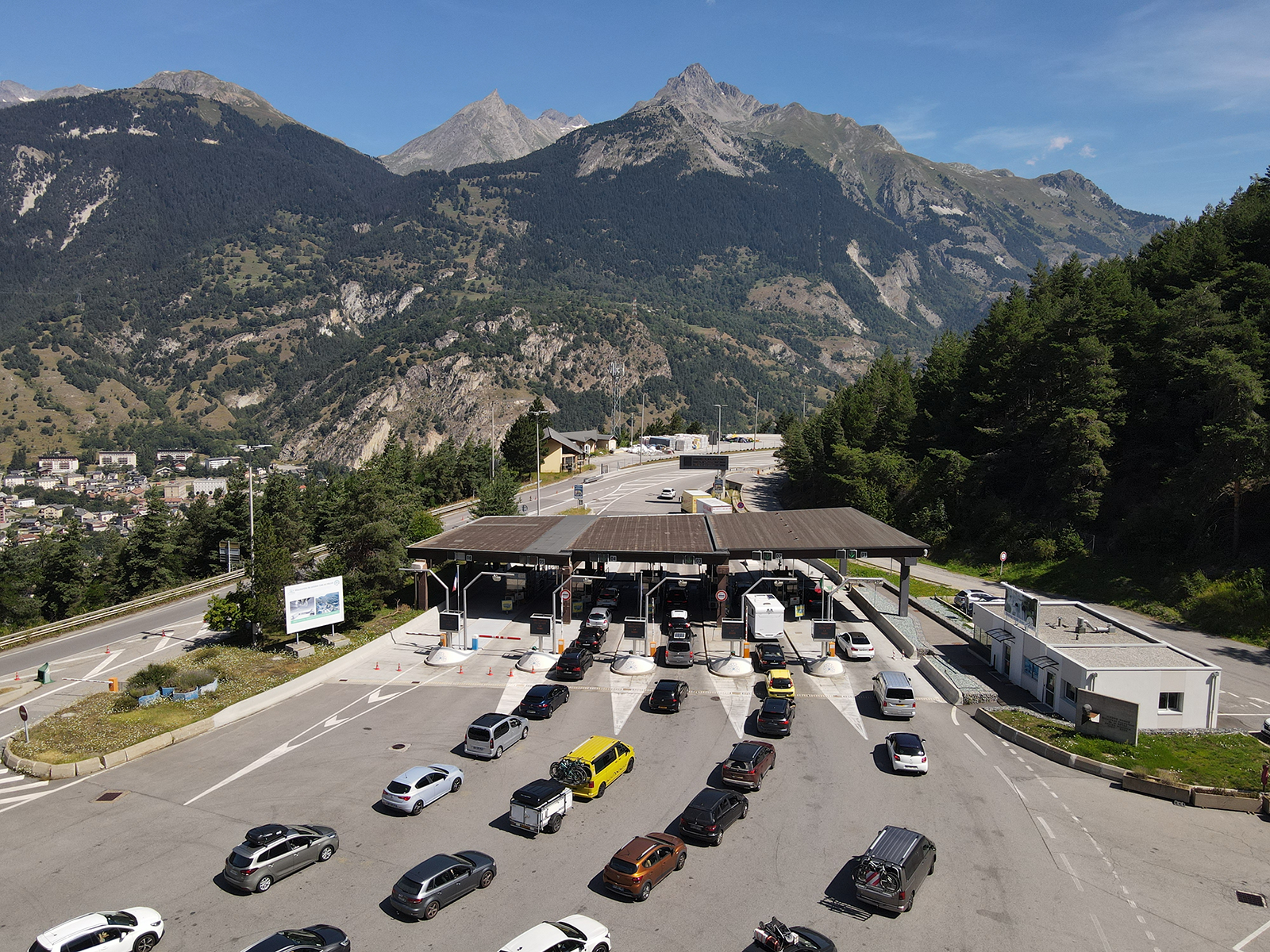
- Variable Message Signs (VMS) located inside the tunnel, at toll booths, and on platforms.
- Information documents provided by toll collectors to users.
- Safety instructions broadcast continuously to users on 13 FM radio stations.
- Half barriers every 2 m, traffic lights every 000 m, blue marker windows every 500 m indicating the distance to be respected and illuminated traffic signs reminding people of the speed and distance to be respected.
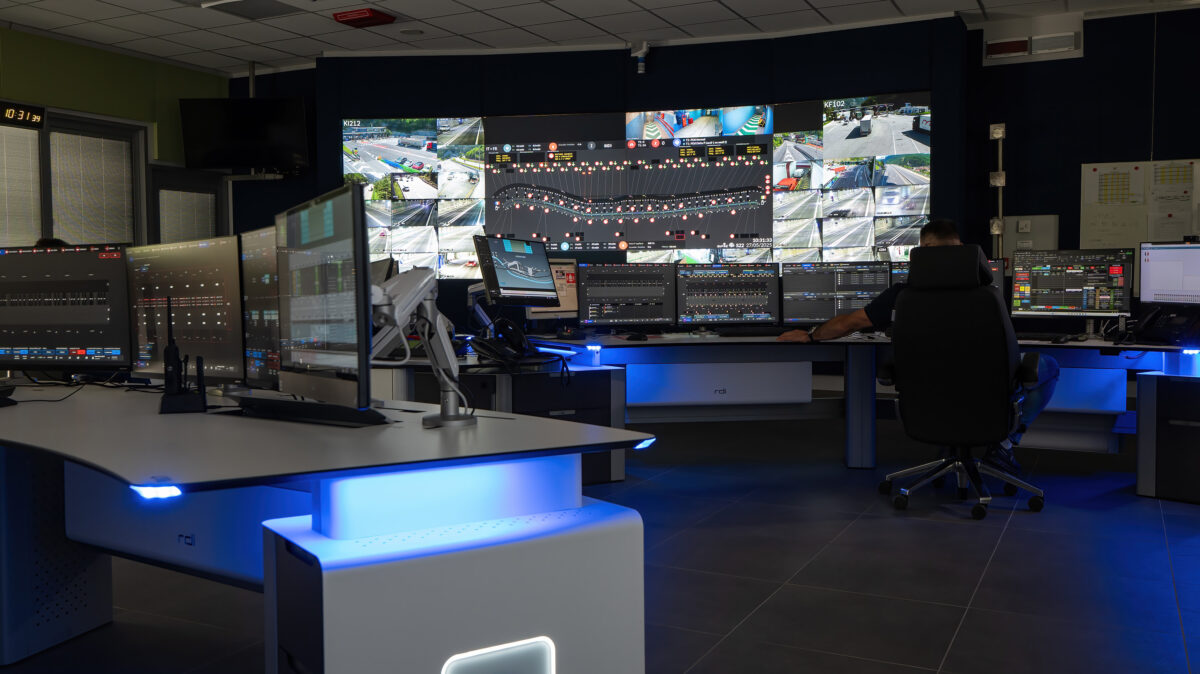
- From the video surveillance network. It consists of more than 250 cameras (204 fixed cameras inside the tunnel, the others judiciously distributed across all platforms and technical premises). All images are recorded and retransmitted to the French and Italian Control Posts on monitors. A DAI (Automatic Incident Detection) system makes it possible to analyze the camera images in order to quickly detect traffic incidents such as: smoke, vehicle stops, slowdowns or traffic jams inside the tunnel.
Safety equipment management
The tunnel is operated from the Italian Centralized Control Post (PCCI); in parallel, a so-called "emergency" control post on the French platform can be activated at any time in the event of a failure of the main control post. The regulators/operators control the safety equipment using supervision tools, various control screens and the Centralized Technical Management (CTM).
This computer system is connected to all the tunnel's equipment and processes nearly 40 pieces of information in real time. It suggests standard actions to regulators/operators and controls all the tunnel's safety equipment (fans, lighting, radio system, video system and computer fire detection).
Rescue and fire-fighting equipment
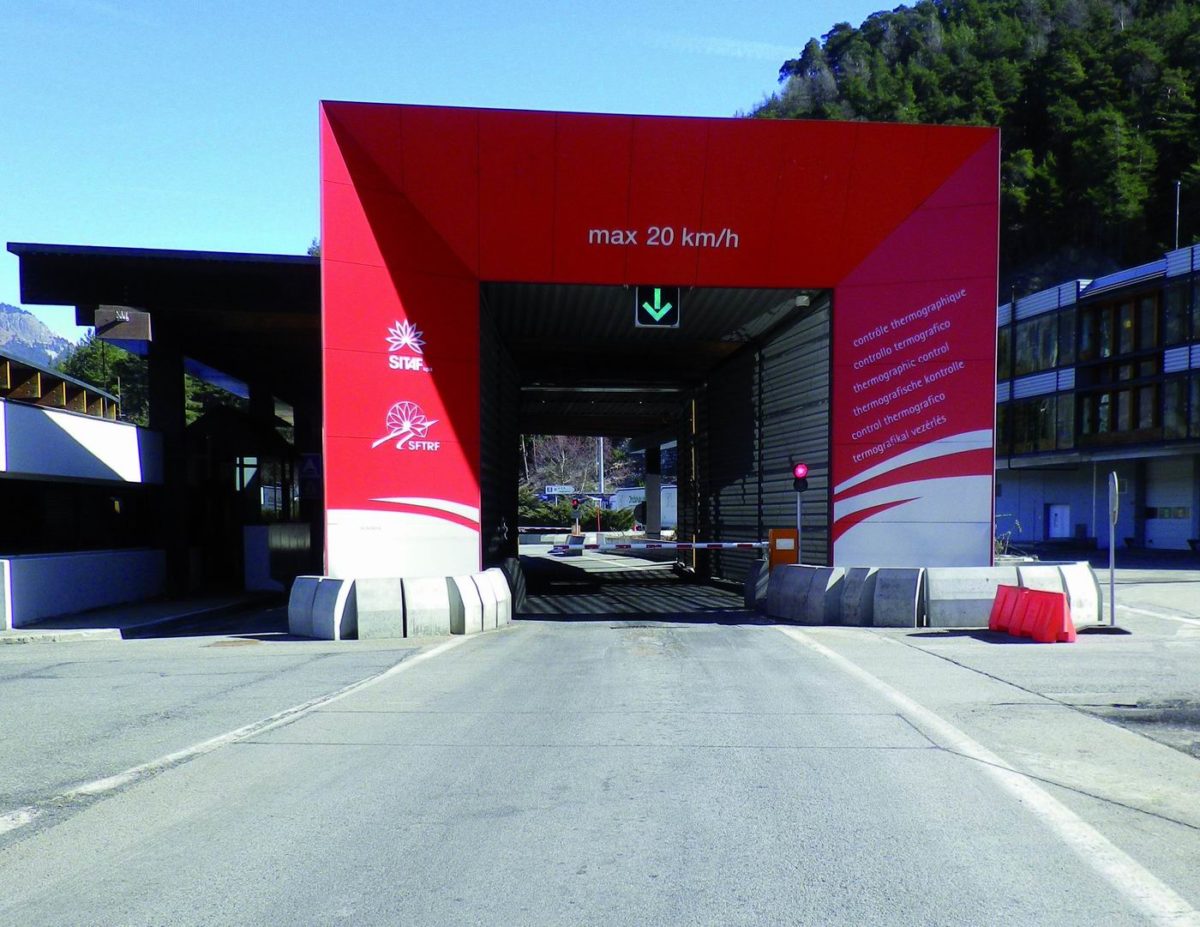
Before entering the tunnel, all heavy goods vehicles pass through one of the two thermal imaging gantries . This monitoring tool helps detect abnormally hot spots on a vehicle.
The atmospheric pressure differences between the two tunnel portals are constantly monitored to maintain adequate sanitary ventilation in the structure. In the event of a fire, controlling this air flow is crucial to prevent the rapid spread of smoke and to keep it in the vault where it is extracted. To achieve this, 24 fans (12 for fresh air, 12 for stale air), distributed across 6 plants, provide ventilation for the tunnel. Two ducts are positioned above the tunnel slab. One allows the suction and evacuation of stale air or fumes through smoke extraction hatches located every 130 m. The second allows fresh air to be injected into the tunnel through the 2 ventilation flues located every 860 m.
With a total capacity of 1 m³/s for fresh air supply and 500 m³/s for stale air evacuation, the system is fully automated and connected to the GTC (Centralized Technical Management).
Two water reservoirs, with a capacity of 500 m³ in Italy and 250 m³ in France, supply 106 fire hydrants distributed every 130 m in the tunnel and on the outside platforms.
Protection and evacuation of users
SOS buttons every 20 meters, as well as 100 emergency call points every 265 meters, allow users to contact the PCC to report an incident. Two fire extinguishers are also available in each call point to respond to a fire.
To date, 34 communication branches between the current tunnel and the second tube are in operation: these branches, which must be reached by users in the event of an incident occurring in the tunnel, are protected by two smoke-tight fire doors. They have a fresh air supply, independent of the tunnel ventilation. Inside, a videoconference station allows users to communicate with the control station and a multilingual conduct sign is displayed.
The CFETIT
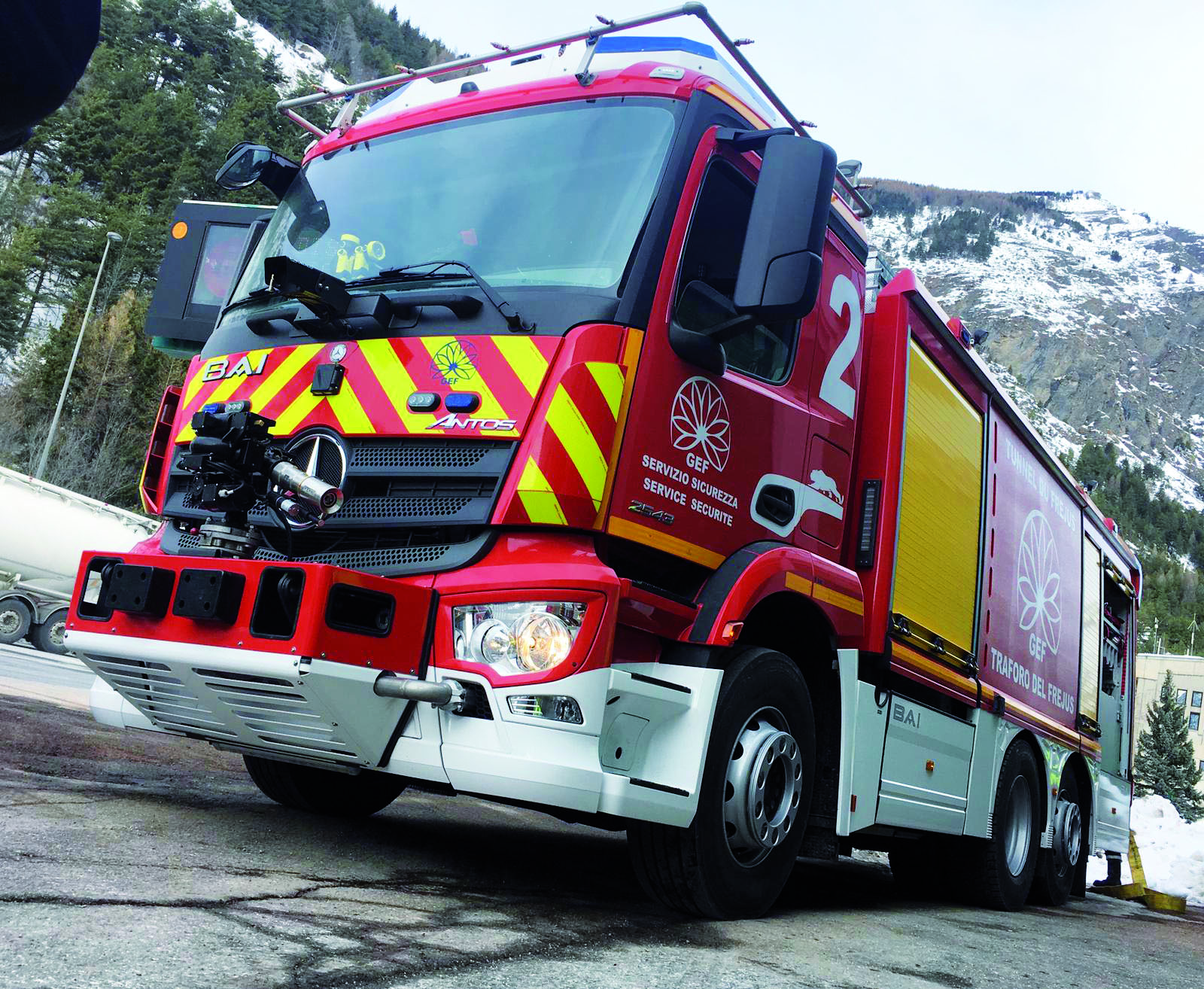
The Tunnel Intervention Techniques Training and Instruction Centre (CFETIT) is the result of a partnership between the Fréjus tunnel companies (SFTRF and SITAF) and the SAVOIE Departmental Fire and Rescue Service, which enabled it to open in April 2002, after two years of work.
This training center, unique in Europe in its design and construction, allows students to learn intervention techniques in enclosed or semi-enclosed environments (tunnels, underground parking, etc.), to understand the risks involved, and to propose appropriate operational procedures. It is located on the French platform of the Fréjus Tunnel. It can accommodate trainees from all backgrounds (tunnel operators, public or private emergency services, underground construction site personnel, etc.) all year round.
It has a technical infrastructure of over 600 m², allowing the re-creation of several types of fire. Speed of intervention, progression in hot and smoky environments, the use of thermal cameras, extinguishing techniques, teamwork, and emergency organization are taught. Fires and scenarios can complement or combine each other. From the simplest to the most complex, they put trainees in a professional and operational situation. Controlling one's reactions, evacuating or rescuing people in difficulty in a completely smoky and hot environment, such as a road tunnel, requires excellent training and regular practice.
Thanks to its powerful mobile smoke generators, CFETIT also offers smoke testing of various underground structures for safety exercises or to check the operation of safety elements (DAI, ventilation, etc.).
The second tube
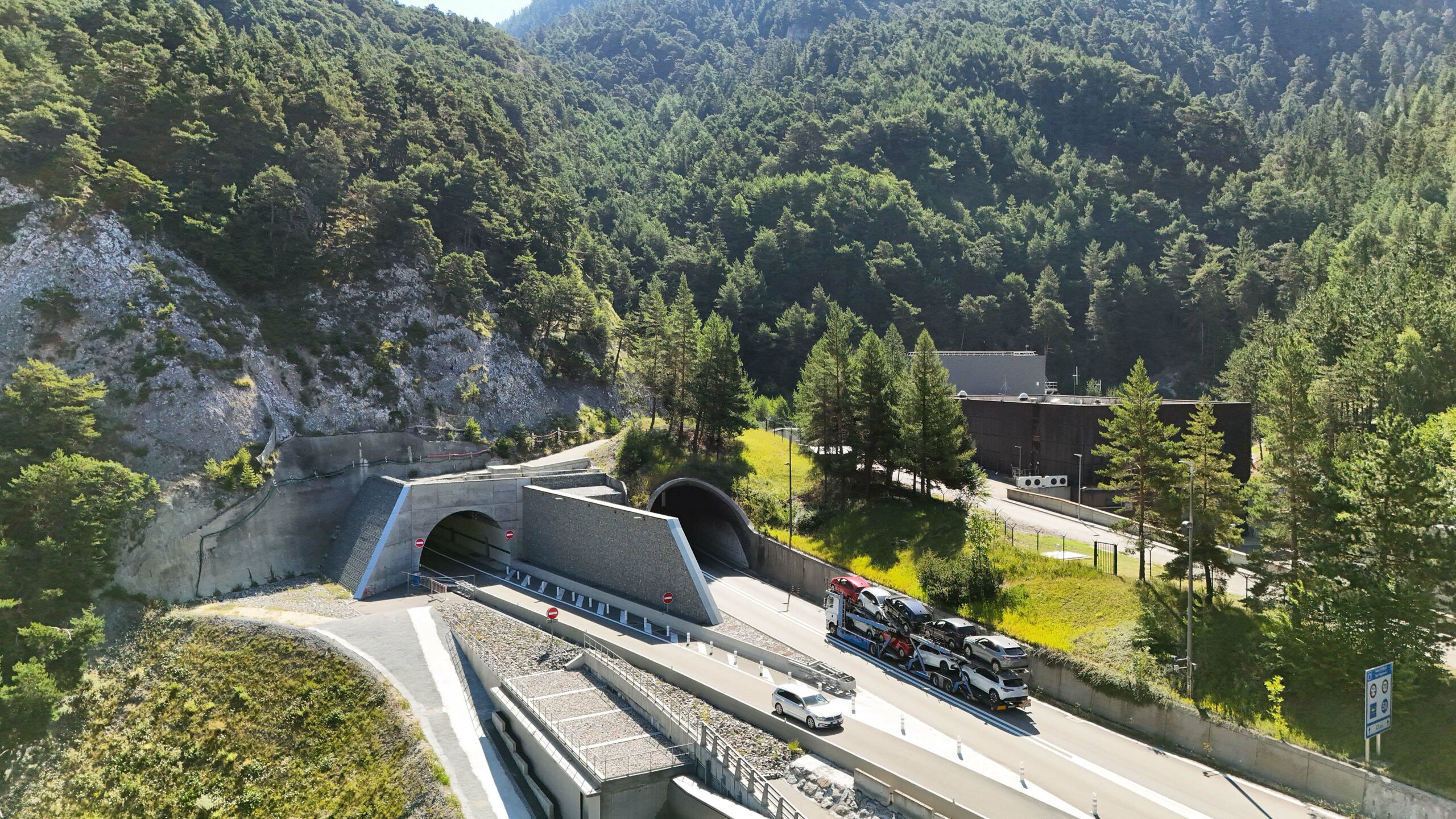
Following the 2004 European directive on tunnel safety, the construction of a second tunnel began at the end of 2009, in order to comply with the obligation to have emergency shelters spaced a maximum of 500 m apart for all tunnels in the trans-European network. The main objective of this operation was to increase the number of shelters in the Fréjus tunnel from 11 to 34 by building branches connected on average every 400 m to the second tube. These branches include emergency shelters with a surface area greater than 50 m2 (regulatory standard).
At the Franco-Italian summit held in Lyon on 3 December 2012, the two governments decided to open this tunnel. The second tunnel will be opened to single-lane traffic (Italy-France direction), while the current tunnel will also be operated simultaneously as a single-lane tunnel (France-Italy direction).

This project is part of the safety work that has been carried out in this tunnel since 2000. The second tube will be financed primarily by users, with a gradual increase in tunnel toll rates spread over several years, with this increase beginning in 2010.
The completion of the tunnelling of the tube, using a tunnel boring machine, was celebrated on 17 November 2014. The civil engineering work continued for several years to complete the construction of the transverse structures which connect the two tubes (shelters, technical stations, drive-through bypasses).
The tunnel was made available to RTE and TERNA for the installation of the Savoie-Piedmont high-voltage direct current power line. Equipment was then deployed in the second tunnel itself and in all the technical stations along its length. In 2020 and 2021, this project was significantly impacted by the health crisis.
The second tunnel was put into service on August 1, 2025, after being inaugurated on July 28. After more than 20 years of studies, procedures and work, this large-scale project significantly improves user safety and modernizes one of the main routes for crossing the Alps, without increasing its capacity.
The new tunnel now accommodates the single lane of traffic heading from Italy to France. Only one lane in the France-Italy direction remains in the original tunnel. In addition to eliminating the risk of head-on collisions, the ventilation system will, in the event of a fire, direct smoke towards the side where there are no longer any vehicles. This represents a concrete step forward for a strategic infrastructure serving Europe and its regions.
Binational bodies
The Fréjus Tunnel Intergovernmental Commission (IGC)
The Intergovernmental Commission (IGC) for the Fréjus Tunnel was created by Law No. 72-627 of July 5, 1972, authorizing the approval of the convention between the French Republic and the Italian Republic concerning the Fréjus road tunnel.
Composed of representatives of the French and Italian supervisory ministries, it exercises control over the concession and, in particular, ensures compliance with the provisions of the concession documents, takes all decisions in application of the powers delegated to it by the governments and, where appropriate, any measures likely to facilitate the construction and operation of the tunnel.
Finally, in an emergency, it takes any decision required for security reasons and reports it to the governments. The IGC issues all opinions and recommendations to the French and Italian governments.
It is chaired alternately by the head of the Italian delegation and then by the head of the French delegation for a period of one year.
Currently, the head of the French delegation is Philippe VOIRY and that of the Italian delegation is Felice MORISCO.
The Security Committee
Since December 1999, the IGC has been supported by a safety committee comprising Franco-Italian tunnel safety experts. The safety committee is responsible for issuing an opinion on the improvement work carried out on the Fréjus Tunnel and its operating arrangements, as well as on specific events likely to have safety implications.
The committee is also responsible for dealing with incidents and accidents occurring during tunnel operations. Companies submit all safety-related issues to the SC, and then to the IGC. The presidency changes every year and is held by France (when the IGC is chaired by an Italian) and then by Italy (France then heads the IGC). Currently, the head of the Italian delegation to the committee is Andrea Tumbiolo and the head of the French delegation is Martin de Wissocq.
The GEIE Groupement d’Exploitation du Fréjus (GEIE GEF)
Since its inception, the Fréjus tunnel has been operated jointly by the two tunnel concession companies, SFTRF for France and SITAF for Italy, in accordance with the Franco-Italian convention of 23 February 1972, particularly for all matters relating to the maintenance and safety of the tunnel.
An Economic Interest Group (EIG), created on 21 September 1988, ensured coordination between the two companies and established the terms for the distribution of revenue and expenditure. In order to meet European requirements relating to the operation of tunnels in cross-border road networks, within the meaning of Article 5 of European Directive 2004/54/EC of 29 April 2004, the EIG became the European Economic Interest Group (EEIG) in 2004.
To enable a single management of the tunnel, the SFTRF and the SITAF established the Fréjus Exploitation Group (GEF) on 1 May 2007. The GEF received from the concession companies the mandate for the operation, maintenance and conservation of the tunnel, excluding new works, the renewal of major equipment and installations, extraordinary maintenance expenses and the collection of tolls, areas which remain the responsibility of the concession companies.
The GEIE-GEF is an entity entirely controlled by the SFTRF and the SITAF. It is equipped with an operational management team. The French and Italian departments responsible for the safety, operation, and maintenance of the tunnel facilities are integrated into this structure, in the form of a secondment contract allowing the provision of SFTRF and SITAF personnel.
The establishment of this single manager contributes to the improvement of security, traffic and services.
MAINTENANCE CENTERS AT THE HEART OF THE NETWORK
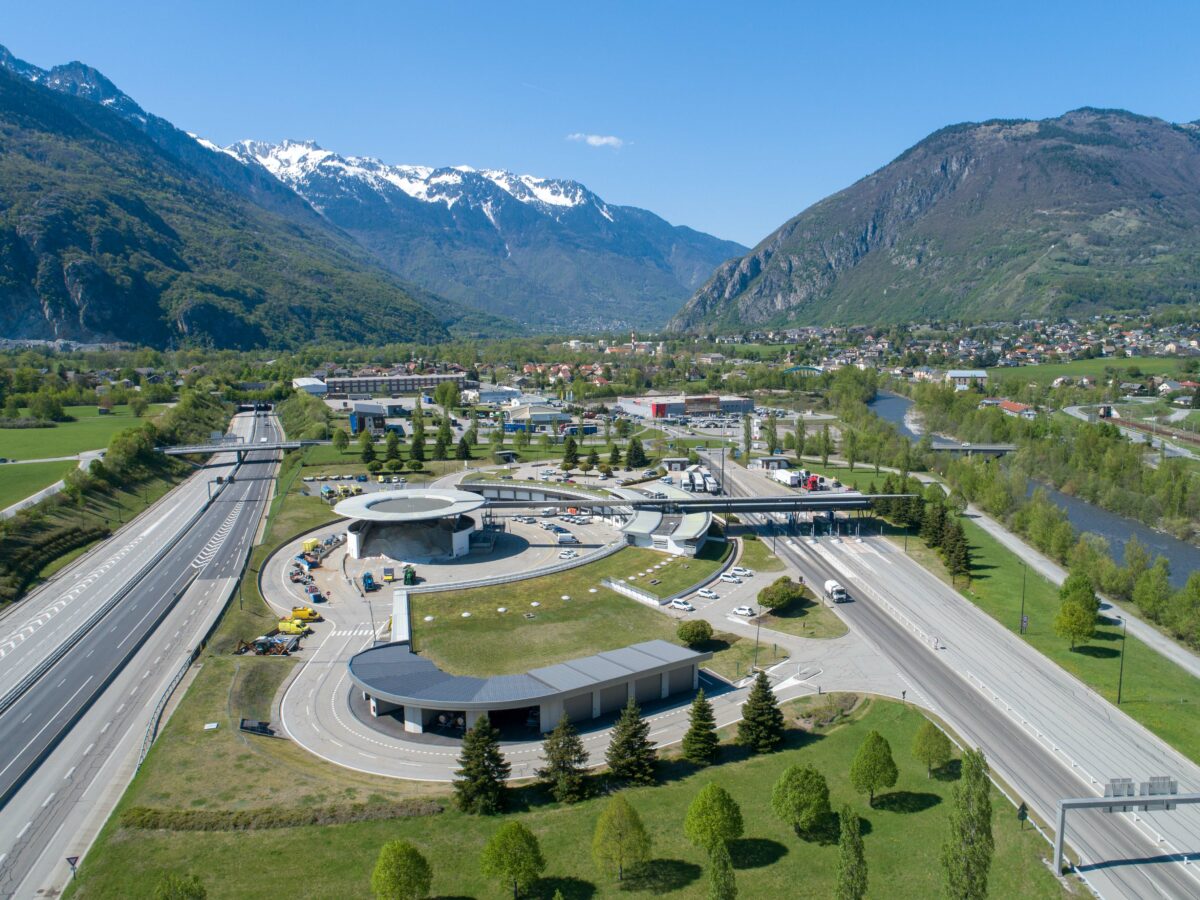
The Maurienne motorway is made up of two maintenance centers, CESAM (Maurienne Motorway Maintenance and Safety Center) and LA PRAZ, with two teams each made up of Road Agents and a Team Leader.
The staff based at CESAM carry out their missions on the lower section of the motorway between Aiton and Saint Michel de Maurienne; the staff based at LA PRAZ carry out their missions on the upper section of the motorway, from Saint-Michel-de-Maurienne to the entrance to the Fréjus tunnel. The agents ensure the installation of the necessary markings in the event of roadworks or accidents, clean the roadway, and maintain rest areas and green spaces.
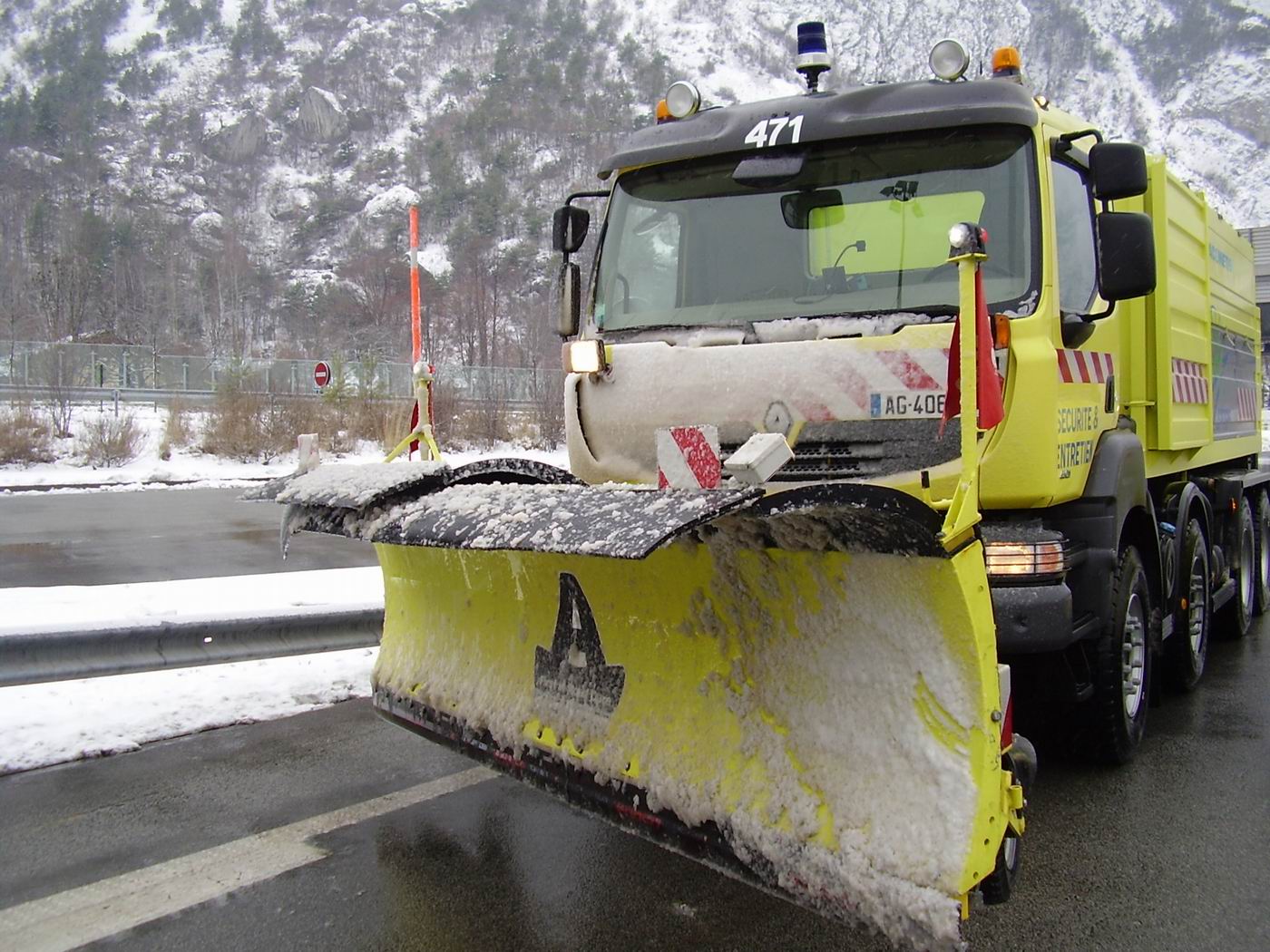
They are also the ones who, during the winter, carry out salting and snow removal operations. Among the staff, patrol officers constantly monitor the motorway route, tracking down the slightest anomaly that could disrupt traffic.
The CESAM premises also house the Control Post (CP) which ensures the surveillance and management of the motorway, the technical workshops, the salt shed, the brine manufacturing plant, the motorway operating services and also the Gendarmerie Motorway Platoon.
A highway under surveillance
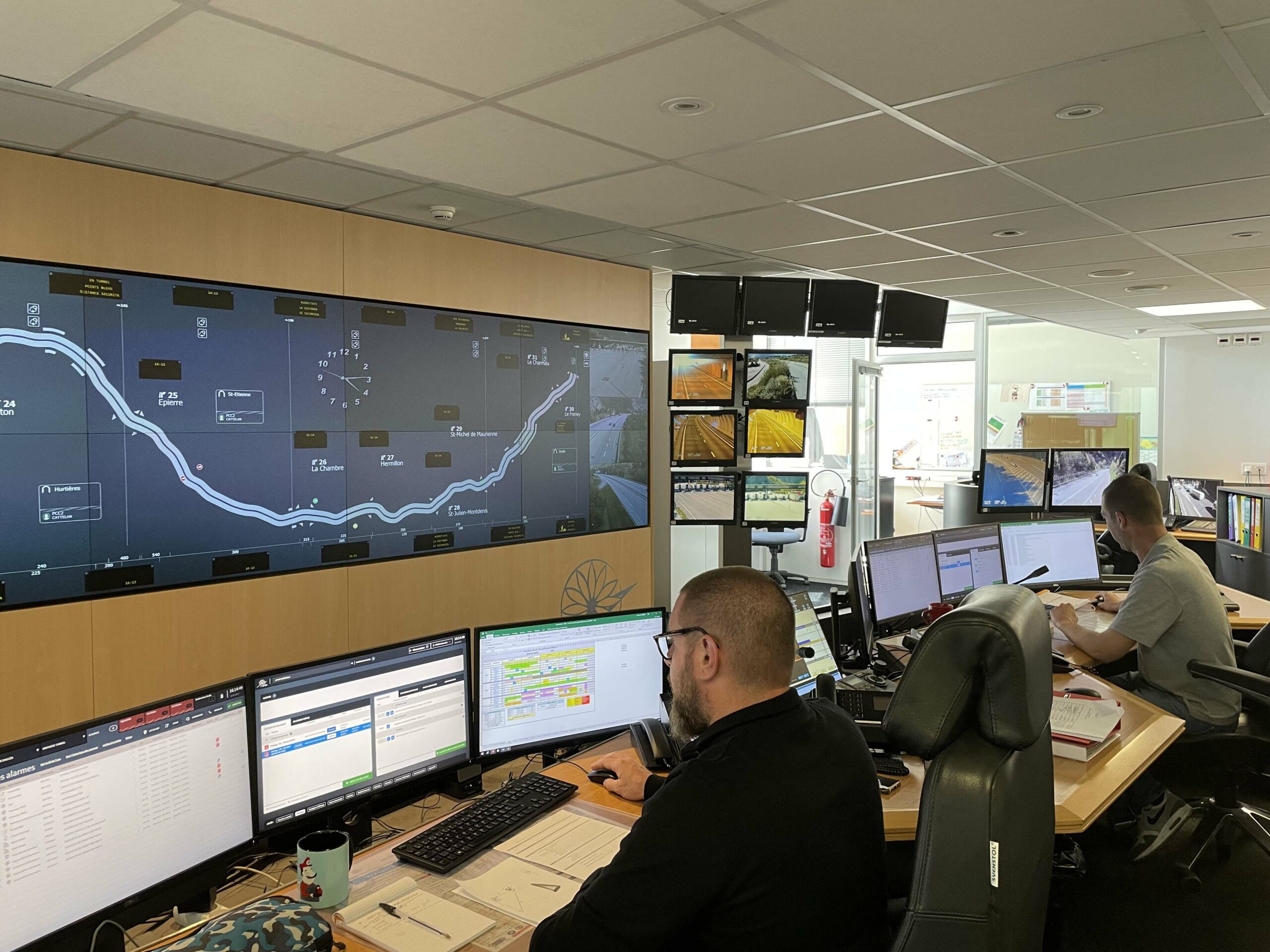
The Maurienne Motorway is under constant surveillance from the Control Post (CP) located at the heart of CESAM. The CP manages the equipment and security of the entire concession, from Aiton to the Fréjus Tunnel platform.
The Maurienne Motorway Control Center manages over 67 km of the network between Aiton and the Fréjus Tunnel. To successfully complete its various missions (network monitoring, alert management, and appropriate response in the event of an accident, incident, weather alert, etc.), teams consisting of a dispatcher and an operator work in shifts 24 hours a day.
The challenges of winter
The Maurienne motorway is a mountain motorway that goes from an altitude of 301 to 1,225 m.
The winter service is therefore of prime interest, especially since there is no alternative route for heavy goods vehicles between Saint Michel de Maurienne and the Fréjus tunnel, a section with the most difficult characteristics in terms of altitude and gradient.