Webcams and practical information
Hurtières Tunnel
St Michel de Maurienne Barrier
Access ramp to the Fréjus tunnel
Tunnel toll
Aiton A430/A43 junction
Interactive traffic information map for the Maurienne motorway (A43) and the Fréjus tunnel. Displays events, disruptions, webcams, and exits. Use the map controls to navigate.
Weather
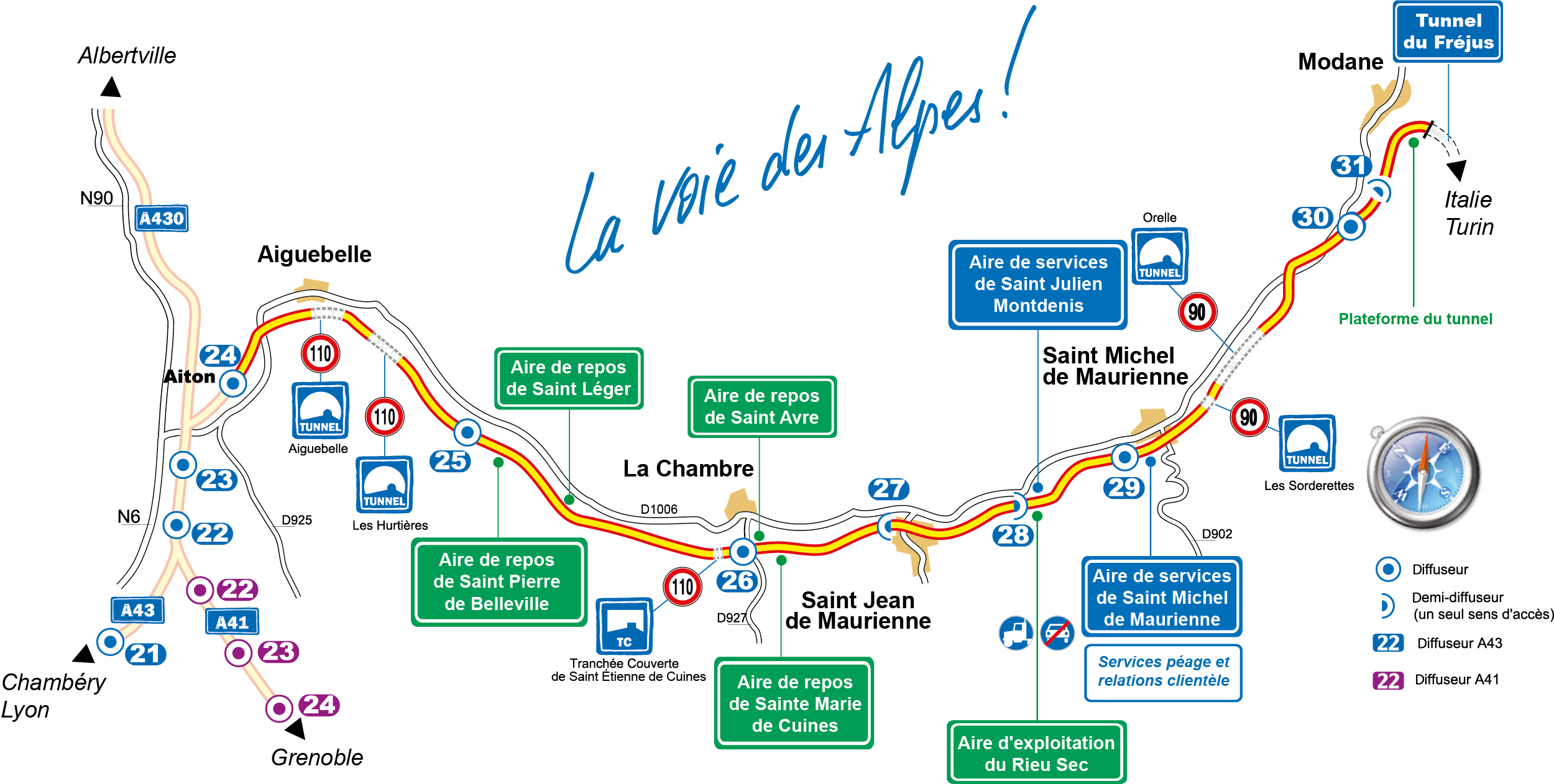
Areas and services
To make crossing the Maurienne even more pleasant, four rest areas and two service areas have been set up, both with charging stations for electric vehicles.
Interactive map
Click on an area to see information about it
Saint Léger rest area
Accessible in the Italy/France direction, the Saint-Léger service area welcomes customers on the banks of the Arc River and offers a clear view of the Lauzière massif which overlooks the village of Epierre.
It has spaces for 23 light vehicles, 28 buses and heavy goods vehicles and 4 caravans.
Saint-Pierre de Belleville rest area
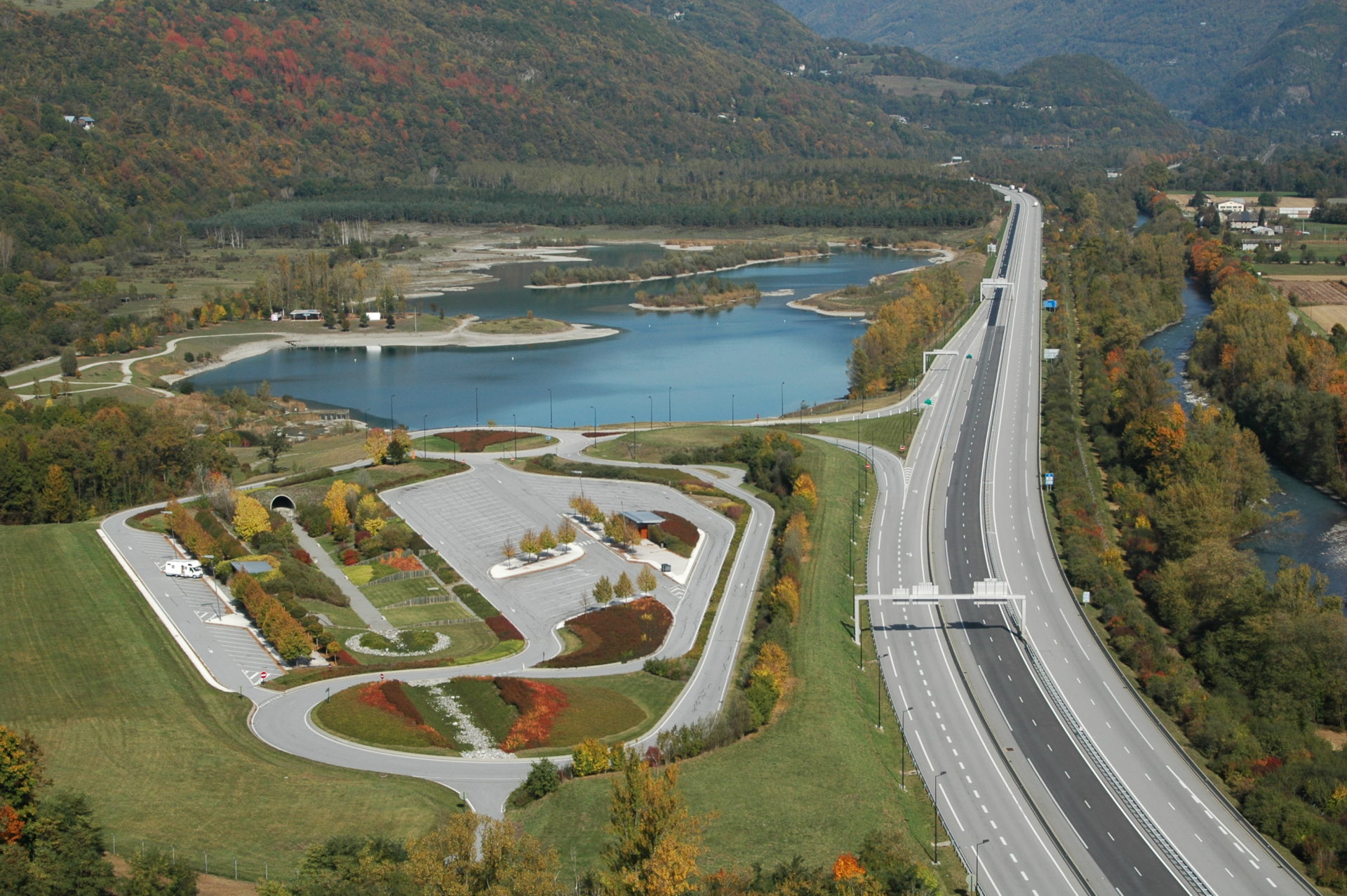
Located in the extension of the Hurtières lake, the Saint-Pierre de Belleville rest area offers a pleasant green space. Accessible from France to Italy, it is distinguished by a landscaped garden called the "canyon garden" which embellishes the space with soft shapes and verdant colors. At its end, a path leads to a belvedere offering views of the Hurtières lake.
It has a capacity of 30 light vehicles, 40 buses and heavy goods vehicles and a caravan.
Saint-Avre rest areas
At the height of Sainte-Marie-de-Cuines, two areas are set up opposite each other: the Sainte-Marie-de-Cuines area is accessible from the France/Italy direction, and the Saint-Avre area from the opposite direction. Located at the foot of the Glandon and Madeleine passes, these two areas are bordered by small hills covered with pine bark and ground cover.
The Sainte-Marie-de-Cuines rest area can accommodate 40 light vehicles, 31 heavy goods vehicles, and 2 caravans. The Saint-Avre rest area has a capacity of 26 light vehicles, 34 heavy goods vehicles, and 2 caravans.
Rest areas of Sainte-Marie-de-Cuines
At the height of Sainte-Marie-de-Cuines, two areas are set up opposite each other: the Sainte-Marie-de-Cuines area is accessible from the France/Italy direction, and the Saint-Avre area from the opposite direction. Located at the foot of the Glandon and Madeleine passes, these two areas are bordered by small hills covered with pine bark and ground cover.
The Sainte-Marie-de-Cuines rest area can accommodate 40 light vehicles, 31 heavy goods vehicles, and 2 caravans. The Saint-Avre rest area has a capacity of 26 light vehicles, 34 heavy goods vehicles, and 2 caravans.
Saint-Julien-Montdenis service area
The Saint-Julien-Montdenis rest area, located at the foot of the Croix des Têtes massif, offers a wide range of motorway services (gas station, refreshment point, showers for road hauliers). It is accessible from Italy to France.
It has a capacity of 19 light vehicles and 100 heavy goods vehicles.
Rieu-Sec exploitation area
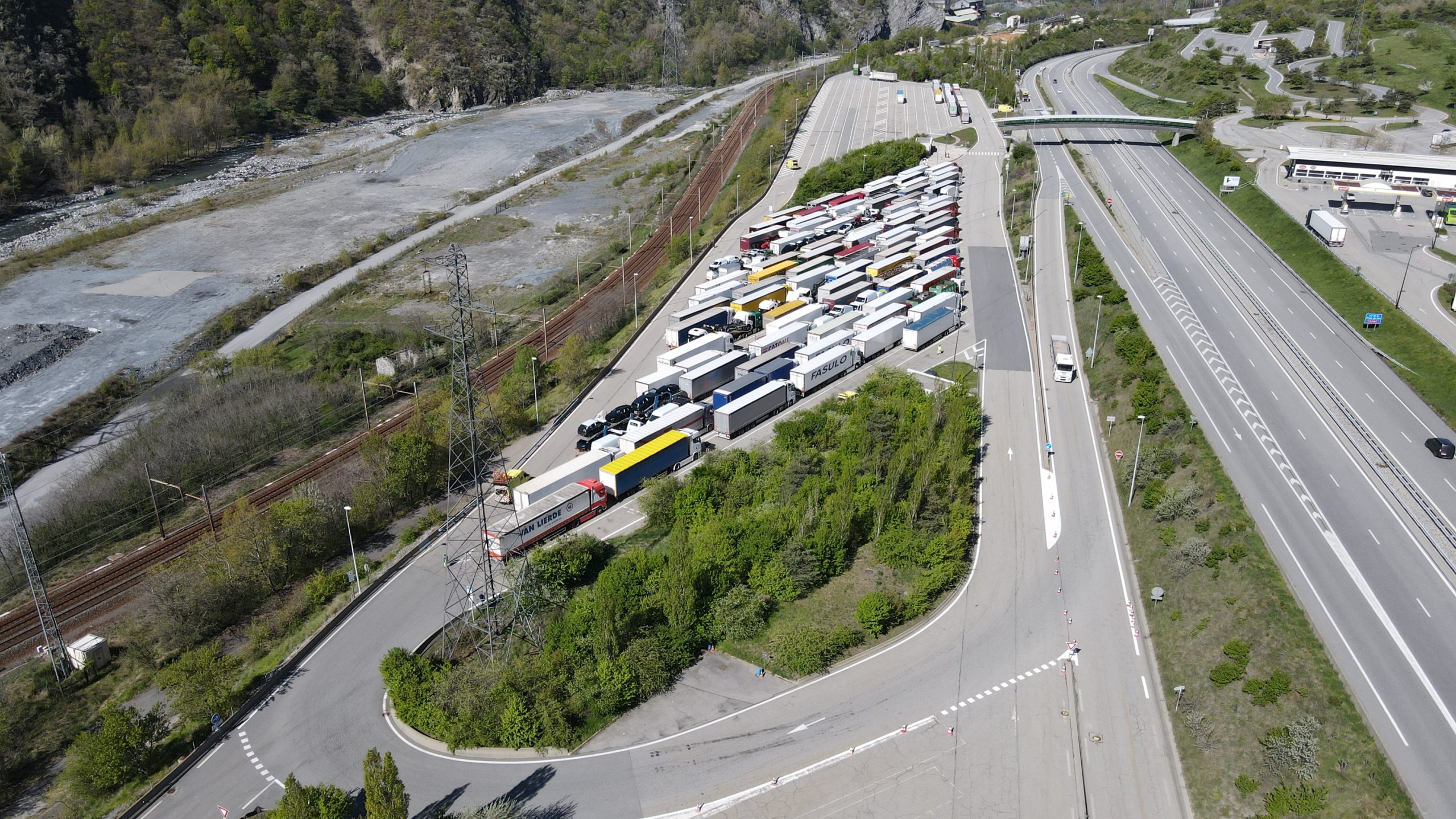
The Rieu-Sec area, with a capacity of 385 heavy goods vehicles, is located in the France/Italy direction, between the Saint-Julien-Montdenis half-interchange and the Saint-Michel-de-Maurienne toll barrier. It allows for the management of operational events requiring heavy goods vehicle storage.
This area is connected to the Saint-Julien-Montdenis service area by a pedestrian bridge.
Saint-Michel-de-Maurienne service area
The Saint-Michel-de-Maurienne service area is located in the extension of the toll barrier. Accessible from France to Italy, it offers a wide view of the rocky cliffs of the Telegraph and has a gas station and a refreshment point.
It has a capacity of 41 light vehicles and 43 buses and heavy goods vehicles.
Safety, awareness, some recommendations

Driving in a tunnel: know the right reflexes!
The Association of French Motorway Companies (ASFA) and the Tunnel Study Center (CETU) are mobilizing on tunnel safety
For road tunnel users, ASFA and CETU have produced a series "Tunnel Instructions", consisting of four educational films on how to behave in tunnels.
These videos explain the general traffic and safety principles that apply in French road tunnels. Some provisions illustrated in the videos may vary locally to adapt to the context of the structures (for example, depending on the length of the tunnel or the number of vehicles using it each day).


